Wood and Stone

THE MEERUT SCRAPBOOK
- Meerut Pictures

Pictures on this Page: 3 Use PageUp/PageDown Keys. E-mail at Bottom.
Last updated - Monday, 15-Jul-2002 05:21:33 EDT


The URL here is http://anilbh.tripod.com/meerut/index.html. An easier way to reach here is to search Google for "pictures of Meerut".

- - -

Some recent local news...


Sunrise/Sunset for 5th May: Specifically for Meerut . Twilight start - 5:11am Sunrise - 5:36am Sunset - 7:00pm Twilight end - :7:25pm. Meerut Latitude : 29.5 deg N, Longitude : 77.05 deg E.

Read previous ones:
April - October 2007,Jan to Apr 07,Oct06 to Jan 07, may06 to sep06,Mar to May 06,Nov to Mar 06,Sep to Nov 05,May to Sep 05,Feb to May05,November to Feb05,Aug-Nov04,May,Jun,Jul,Aug,Feb-May04,Nov-Jan04,Oct03,Sep03,Aug03,Jul03,Jun03, May03,April03,Feb03,January03

Mangoes

This could appear to be a scene of idyllic indolence. However there are a lot of things that are not visible . This is a dawn to to dusk occupation. Mangoes have to be plucked off the trees, birds have to be kept away. Someone has to be at the cart all the time. Children of the neighbourhood who just want one or two are welcome. The season will last till end of July or mid-August. An elevated expressway here would bring misery to many, and would certainly look worse than the existing tree lined road. A few feet extension on either side could ease the increasing traffic.

We have not seen a June like this for years! It exceeded 40 deg C only on a few days. Today July 1st is a clear day. A little too clear. Which means all the reserves of happiness are going to be depleted. In the fifties we could hear words of joy about the Sun from Irish Brothers and British Missionaries. We generally considered them to be superior people, but had strong doubts about their sanity when they expressed positive thoughts about the blazing Sun.


The Great Debate

They were discussing crude oil prices on NDTV. Pranoy Roy repeatedly mentioned that the taxation component in what we pay at the pump is as high as 50%. In other words the amount we pay as taxes is the same as the cost of the petrol/diesel. 100% taxation !!! And yesterday(May 31st) there was news about the Petroleum minister meeting the Finance minister, requesting him to lower taxes. There seems to be a lot of hesitation about this . After all who can refuse a free lunch. They say there is a thin red line between Madness and Genius, perhaps between Stupidity and Bravery... Is there one between Theft and Tax? A closer look at 100% taxation reveals aspects which are not obvious in a cursory view. Supposing the cost price of Petrol goes up by Rs. 5/=. Then the amount of tax goes up by a similar amount. Why can't the Finance ministry be content with a fixed amount per liter ? When the tax component is 100%, how can they talk of subsidies? But then we are very adept at being comfortable with nonsense and self-contradictions.

Oil companies making losses? A little belt tightening could easily solve that. These are oozing with fat.


This and That

They are cleaning the Abu ka Nala again . Last it was done was in 2001. With Excavators and something called a Porklane machine. The people doing it are not aware that just about 6-7 ft below the water surface is a brick lining. The entire Bombay Bazaar shopkeepers know that a little more than a decade back this brick lining used to be visible. The problem is that with these powerful machines they are digging up the brick lining too, which need not be done. The nala used to be cleaned every week or two. An item in Dainik Jagran says about 3 crores have been sanctioned very magnanimously for some excavators and a Porklane machine. This city pays that much in Excise and local taxes on Diesel and Petrol EVERY day. The cleaning of the entire nala could take 10s of crores , but MUST be done. None of the feeder drains flow into the Nala as the level is much too high, and there is stagnant water all over the city. Hence you can just imagine what a large area ( not merely the cantonment ) is vulnerable to rats, mosquitoes, sickness and disease. And in this region you can see the same thing in Modinagar. Of course, cleanliness and other basic requirements of the populations are conveniently labeled as either elítist or populist both these words take the Government of the hook from delivering what it is paid for. Elítist has a socialist undertone and populist goes back to monarchical times. One does not expect people in the media to know that democracy by definition is populist. The word also implies that Politicians and Babus know better :). Another word used often in similar vein is 'unauthorised'. Everything which came after 15th August 1947 is 'unauthorised':). We were a nation of 33 crores at that time, we are over 100 crores now. That makes for about 67 crores unauthorised :).

If you run across someone in Government and mention the filth , they always have a good explanation. 'The people are throwing too much polythene in the garbage'. Well take a look at what has been taken out from the Nala , see how much polythene you can find.

However one can see distinct signs that teh town is cleaning up, even without dustbins. People still unload garbage at the points where dustbins used to be placed some two decades back. India must be the only place on Earth where they try to keep a town clean without dustbins.


If you are still reeling from shock of wondering "how can a place be so filthy?" then maybe pictures of the Mall with Amaltash in full bloom may take your mind off that.


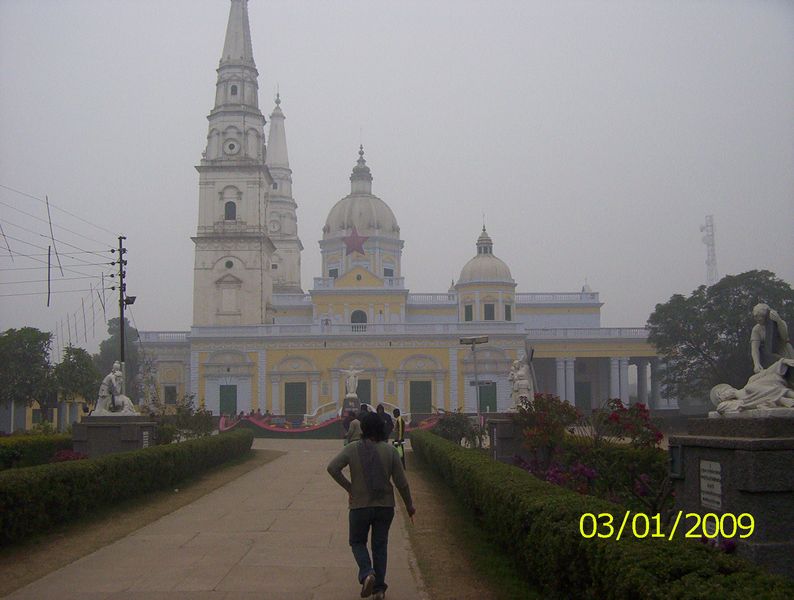
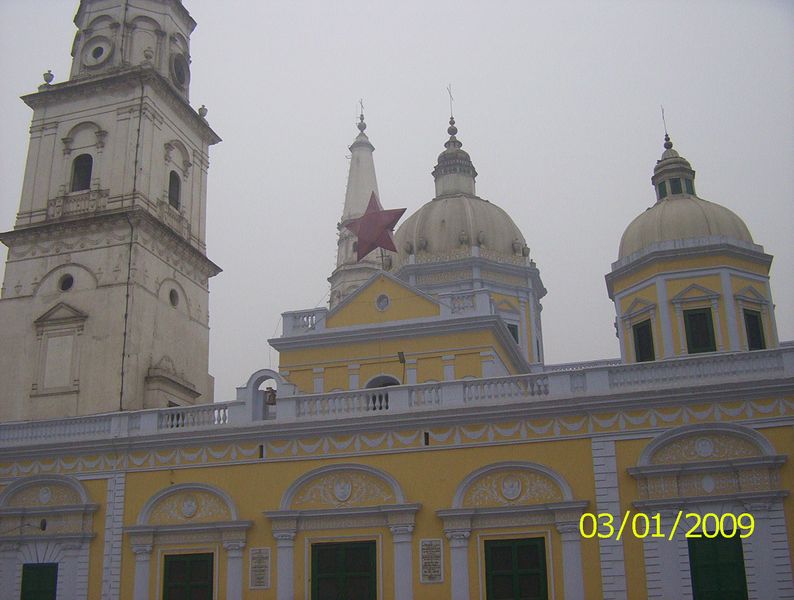
St. Mary's

St. Mary's is still reeling under an extortionate tax much larger than their income which was slapped on them in 2001 by the then half-wit Sub-area-commander a Nambiar ( who was thrown out of the army ). They will now try to move out of the Cantonment since East India Company rules ( dated 1836 ) still in force do not allow them to progress and develop. You need permissions for everything. You could locate the Old Grant in list of references at the bottom of the page, this actually has discriminatory words regarding the natives and is still a valid law ( of 1836 vintage - i.e pre-mutiny).

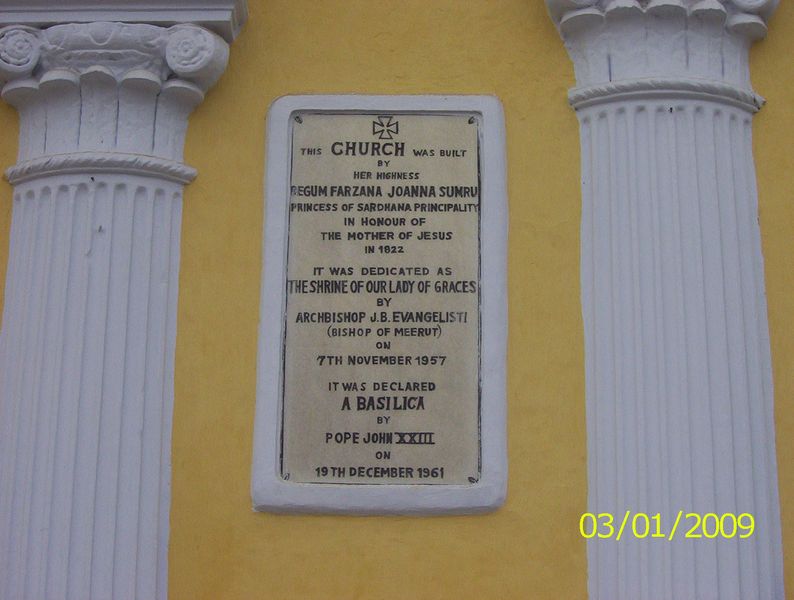
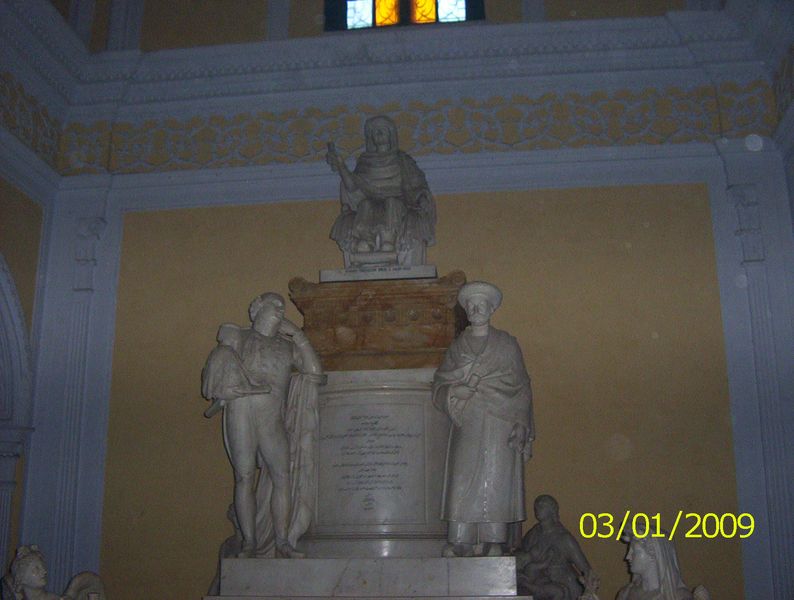
Around May 10th a train highlighting the Mutiny events had parked here in Meerut for 3 days. People had to stand in queues for almost 3 hours to get a look at the very well done display. A book was also available in Hindi and English. It is called '1857 The Great March - Meerut to Delhi'. Thus again by focusing on events it diverted attention from the cause which was extortionate taxation of farmers ( the US declaration of Independence was the result of the similar cause -'Taxation without Representation' ). It has at least one error in fact . Walter Reinhardt of Begum Sumroo and Sardhana fame is mentioned as a rebellious employee of the East India Company. Reinhardt was from Luxembourg ( not England ). And this points out a much overlooked fact - that many Europeans were employed by Nawabs , and Rajahs in their State forces. The Sardhana graveyard has graves of Poles , Czechs and Italians. At the back of the book is a list of various altercations ( far from complete) right from the time the East India Company got into seriously collecting taxes ( through collectors - yes ICS people ). These confrontations never really ended with the mutiny. However later on the company was much richer and possessed a much larger army, and like was far better organised, we Indians really did not understand the term in those days.

A strange thing happened on 30th April. Lines from an interview of an Ex-prime minister of England Margaret Thatcher were included in many TV channels as well as in many papers. So what is so strange ? The interview took place more than 20 Years ago in 1985.

Just another day in Paradise

There are problems in paradise too. You may be aware that the moment you even whisper a number, Paradise vanishes. Recent local papers mentioned that there is a glut of potatoes in all the areas nearby. All cold storages are refusing space. Potatoes were selling at a little over Rs. 5.00 per Kg in the market. The farmer was not getting more than Rs.2.60 for his efforts. This at a time when there is a shortage of wheat and rice. Even so I would rather take pictures of fields and trees rather than multi-storied buildings, flyovers and traffic jams.

To each his own. Most people's heroes are those with an unlimited bank balance, sitting in air-conditioned comfort, flicking specks of dust from their ironed suits. Mine are these people who are in the fields when the temperatures reach 45 deg C ( like now mid-May).


Barring the tractor, this could be a scene painted 300 years earlier ( Potatoes and chillies were brought to India by the Portuguese in the 17th century ). More about the low value of agricultural products. Not far from here in many village shops you can pick up a packet of potato chips at Rs.20/- for 100 gms. or about Rs. 200 per kg. Which is about 40 times the value the farmer gets. Maybe an MBA graduate understands this.. One thing is certain there are major aberrations in the Indian Economic scene.

An electricity pole is also visible in one of the pictures. It is for a tube-well nearby. Our villages are far from electrified. With barely 4 hours of electricity. So even those who first got connections have got them disconnected due to enforced minimum charges.


The passage of time

Same place 2 months later.


Agriculture throws up a lot of combustible material. This could be use to generate a lot of electricity with mini-turbine generators the same way as Sugar mills do. And proper electrification could make Industry zoom due to a surge in demand from electrical products.

Quite unbelievable that it was rural India which paid for Calcutta's opulence( it was the East India Company Capital with head quarters in Fort William ). It was ranked just behind London and Paris in the mid-19th century. And even today they are not provided basic Municipal services, leave alone Electricity.


Power generation without Oil, Coal, Wind,Water or Sun

This plant is not far from where the above pictures were taken. To the right of the picture you can see a small portion of the hill of agricultural waste delivered to the plant. They have more than a few weeks reserve, and have to refuse trucks which appear without prior appointment. This Power plant is NOT attached to a sugar mill where this method( power from burning husk ) has been the standard procedure for at least 70 years. There is much less air pollution than coal based plants like the C power station in Delhi. In any case Employment should get higher priority than Environment in India.

Imagine this if plants like this come up in rural areas an enormous boost can be given to the well-intentioned Rural Employment scheme. Quite a few people are required to man the plant . Then rural folk will also be paid for the combustible stuff they bring.. And Electricity just stimulates demand for a hundred other things. Of course fairly intensive feasibility studies are required.


The Wells of Western UP

Sad. This is one book you will never see in bookshops or railway station magazine stands. It is very regional in outlook, and it is also the best book I have ever read. ( For some reason regional is a bad word, among those who have read so many books, that nothing is visible any longer ). "Wells" mean nothing to most of the urban population today. Less than half a century ago they were important everywhere, even in the ghastly places they now call Metros. The book has traced the history of an amazing number of wells of West UP. Be warned only the address of the publishing organisation and the website is in English. The funds for publishing came from the Cultural department of the Royal Netherlands Embassy. Where do the hundreds of thousands of crores the Indian Government collects, go to?
Want to read this then contact Janhit foundation, D-80 Shastri Nagar , Meerut.. Email: janhitfoundation@gmail.com , website: www.janhitfoundation.in Phone : 0121-2763418, 40044123. . Price ? Priceless. This book is really meant only for those who believe fact is more interesting than fiction. Read both the Introduction by Anil Rana and the preface by Harishanker Sharma. The book is not a hackneyed lament about the passage of time or the disruption due to advancing technology, it is a very valid prayer for the preservation or restoration of items which were once the hub of life in this area.


The 10 Most Influential People of the Second Millennium

By Arthur M. Schesinger Jr.
Arthur M. Schesinger Jr. the Pulitzer Prize-winning historian and writer, is the Albert Schweitzer Professor in the Humanities at the City of New York. He served as special assistant to the president in the Kennedy administration.
As we anticipate the advent of the third millennium, The World Almanac asked Professor Schlesinger whom he considered to be the 10 most influential people of the second millennium. Here are the names he listed, in order of importance.
Name Born Died
1. William Shakespeare 1564 1618
2. Isaac Newton 1642 1727
3. Charles Darwin 1809 1882
4. Nicolaus Copernicus 1473 1543
5. Galileo Galilei 1564 1642
6. Albert Einstein 1879 1955
7. Christopher Columbus 1451 1506
8. Abraham Lincoln 1809 1865
9. Johann Gutenberg c.1397 1468
10. William Harvey 1578 1657

Don't know what your reactions are about the list. They are bound to be different from the year 2000, if you saw this list in the newspapers. Mine are these. I was amazed that Shakespeare is put at the head. No one born in the most turbulent century 1900 - 2000, makes it !! A mind boggling number of silent and unsung people who worked on the Silicon chip, Internet and myriad other modern developments are ignored - would any list be enough ? The Professor is/was(?) from a Humanities background - perhaps that is the explanation :). Where does one fit in the Wright Brothers, Henry Ford, Edison, Bell, Nikolai Tesla ... and other great men who have influenced modern life more than anybody else ? If impact on modern life is the criteria, then in my view Edison would head the list. Did you know that Henry Ford and Tesla both worked for a while at Edison's Labs?

"On a clear day you can see forever"

Surprise . This is how a lot of Western UP looks like. The population density here is more than other parts of UP. So where did all the people go. UP is India's most populous State, no doubt about that. However in our backwardness are we doing something right? The largest city does not exceed a population of 3 million (+/- .5million). There are only 3 or 4 towns/cities more than 1 million.

Such roads lead to our greatest and grandest people. They survive not only against the forces of nature and the planet but artificial, contrived ones - corrupt and unresponsive Government being one. Now they are not so heavily taxed, but The Raj was certainly financed by them. Through the Settlement system.

Back to the events of 1857. Neither "Mutiny" or "War of Independence" is correct. It is called the "Peasant Rebellion" by Eric Stokes in his book of the same name. What is hidden in abstruse tracts about the rebellion is that all Sepoys came from a rural background and knew well the exorbitant levels of taxation borne by the farmers. The Rajas had never been able to collect such huge amounts for the simple reason non-payment of levy did not result in confiscation of the very land which allowed farmers to live, that (confiscation) is what the Honourable gentlemen of the East India Company made into Law. You may want to read a very current and readable book by William Dalrymple - The Last Moghul. Completely anecdotal or maybe I missed something.

Here is an interesting episode dating back to the mutiny...
Accordingly a force of 300 Europeans , consisting of 100 men of the artillery and 200 of the 60th Rifles, were dispatched towards Hapur on the morning of the 27th August, the last and greatest day of Muharram. The first halting-place was selected with a view of allowing the troops to remain near enough to Meerut to hear any firing , should any disturbances occur there, and at the same time to frighten Walidad by the advance of our troops. In the spirit of the instructions already issued , the column had orders not to go near Malagarh nor to advance beyond Hapur unless attacked or pursuing . It therefore took up up a position near Hapur, and Mr. Wilson took advantage of the presence of the troops to collect the revenue. The Rajput landowners of Pilkhua sent in to say their revenue was ready and that they were ready to bring it in, but begged that two messengers should be sent to accompany them . Two men were sent , but as soon as they entered the village were murdered by these very people of Pilkhua. A portion of the column visited this village with exemplary punishment. ... page 183 of The Old Gazetteer of Meerut 1903.. Earlier reference to this at this site.

Rural folk were condescendingly called peasants in medieval Europe. Due to the phase lag due to percolation such attitudes still exist in India specially among those suffering from westernisation by induction. However the point is such people are not influenced by artificial luminosity and aura. In other words they are more likely to call a spade a spade, or a thief a thief.

The Chakkar of Empire and colonialism was called The White man's burden , a phrase which has lost its meaning even in the West. Strangely not even the most vehement critic of colonialism ever pointed out that the burden included a pretty heavy treasure chest :) .

1857 minus 43 years

An amazing Battle forgotten

The defense of Kalunga created the Gurkha Legend

It is interesting to examine some major events just prior to the mutiny of 1857. Nepal was attacked in 1814.( Under the treaty of Sigauli they procured Mussoorie, Simla , Nainital. Darjeeling was extracted in 1835 some 21 years later ) . Macaulay's speech ridiculing Indian Knowledge etc. came out somewhere in 1833? And that marks the start of the end of a certain degree of British - Indian social Interaction. Graves prior to 1833 often have a distinct Indian influence to them. After 1857 there were no more annexations / battles internally ( prior to that there may have been one in a month or two* ). They just had to extend their demands and the Rajas Maharajas would just bend over backwards. The Princely States really receded after Independence. However before Independence they had paid huge sums to the British. They finally became paupers after Indira Gandhi withdrew their Privy Purses. The defeat of the Gurkhas really gave a lot of boost to the EIC morale.

*If you stay at Carlton's Hotel in Happy Valley in Mussoorie you can see a number of paintings depicting battle scenes in various villages. Some of these villages may now have vanished.

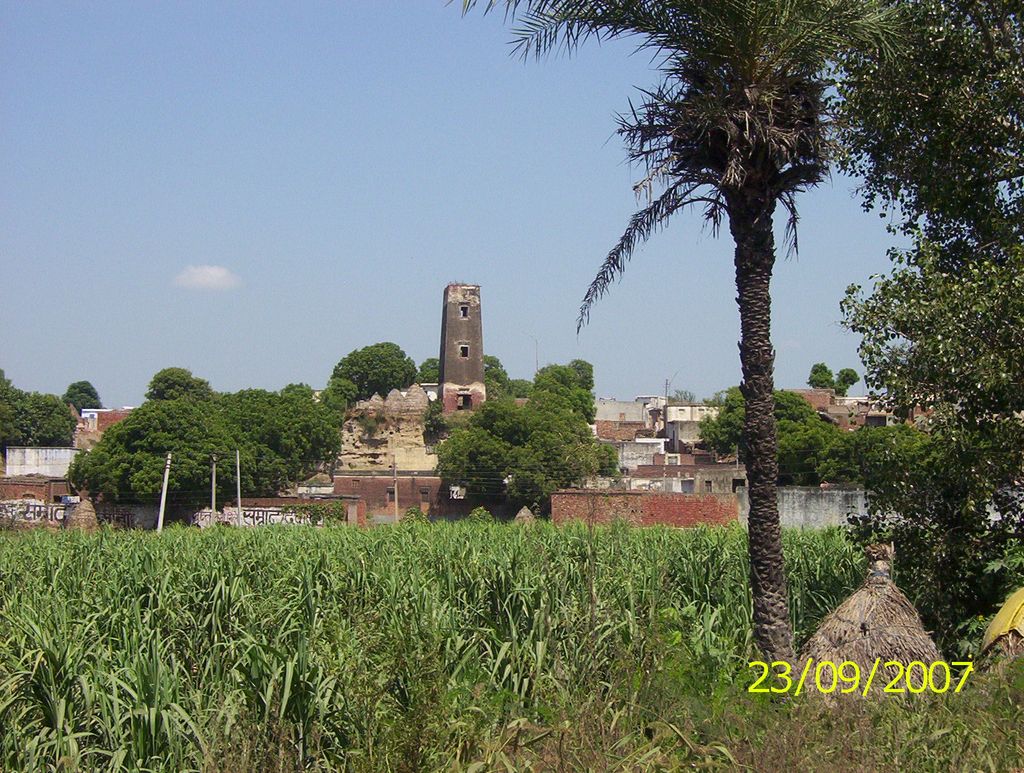
The tower which marks Gillespie's grave in St. John's cemetery, gives 31st October 1814 as the date of his death. And therein lies a tale which seems to have been told only in Nepal. Not of Gillespie and his East India Company 'Army' but of the people he attacked. A settlement at Kalunga near Dehradun of Gurkhas in which almost 30% were Women and Children . Gillespie took about 4000 men from Meerut around 23rd of October ( the official invasion ordered by Hastings was to start on November 1st ). The settlement of Gurkhas numbered only about 700! The encounter lasted almost 5 to 6 weeks. There are detailed letters dating from that time which make the long-drawn battle come alive, after close to 200 years. That settlement contained perhaps 300 to 400 Gurkhas who called themselves "The Malechha - Kalanala Company ". The British were called Malechhas by the Nepalis and Malechha - Kalanala roughly translates to "The company which is the fire of death to the British ". Just 43 years later the Gurkhas with the Sikhs sided with the British and were instrumental in crushing the "Mutiny". Six letters which were written while the battle was on were found by the Regmi Research foundation and are part of a project which lasted 20 years. Read those by clicking here .

This tower is a landmark of sorts in the immediate region. The more knowledgeable know it as Gillespie's grave. What even the most knowledgeable don't know is that it is also a memorial to the battle that created the legend of the Gurkhas. About the confrontation in which he was killed. It is sheer chance and the power of the Internet that one finds enormous amount of detail for this one battle ( very prolonged ) - thanks mainly to the Regmi Research Foundation which took 20 years to translate material into English with support from an US University. The reasons why this ( details of the battle ) was kept undercover need not be explained. Type Gillespie in the Google Books box below to get an account of the Vellore battle in Gillespie's own words.

Thinking of visiting India for mutiny related sites or general site-seeing then you could do worse than click here

Google Book Search

Here is the excerpt Pages 559 - 561 of the UNITED SERVICES MAGAZINE of 1840 . If you can get your hands on this particular issue (it can be downloaded from Google books (40 MB!)), you will get a good idea of the 'high' that pervaded the British psyché at that time. The account relates to 1806. Still a few years before 1812, which, with the defeat of Napolean was a major landmark in the ascendancy of the British. Click here to read.

Also from the same magazine (1840) is a discussion about muskets / rifles . I am not sure of what distinguished one from the other. Or maybe they meant the same thing. My impression is that rifles used cartridges and muskets the the shot and powder had to be filled in manually. Very interesting all the same since these were the kind of weapons that were used during the 'mutiny'.

- - -    MEERUT is an ancient town , but little literature about it is available  . Any information mythical, factual, or in the form of hand me down stories is welcome. Contact address is at the bottom of page.

         It is not generally known that Meerut was included in the 16 major towns of Ashokan times . An Ashokan pillar was erected here which means that this was a major buddhist center . Contrary to popular belief this pillar was shifted to Delhi not by the British but by  Firoz Shah around 1300 AD For the uninitiated the Ashokan Period  ( short history lesson ) itself dates at around 256 BC. About 75 years after Alexander's ( Sikander in Hindi ) invasion of the Punjab.
Don't know what Ashoka wrote about ? Then checkout the translation of all his Edicts by clicking here .

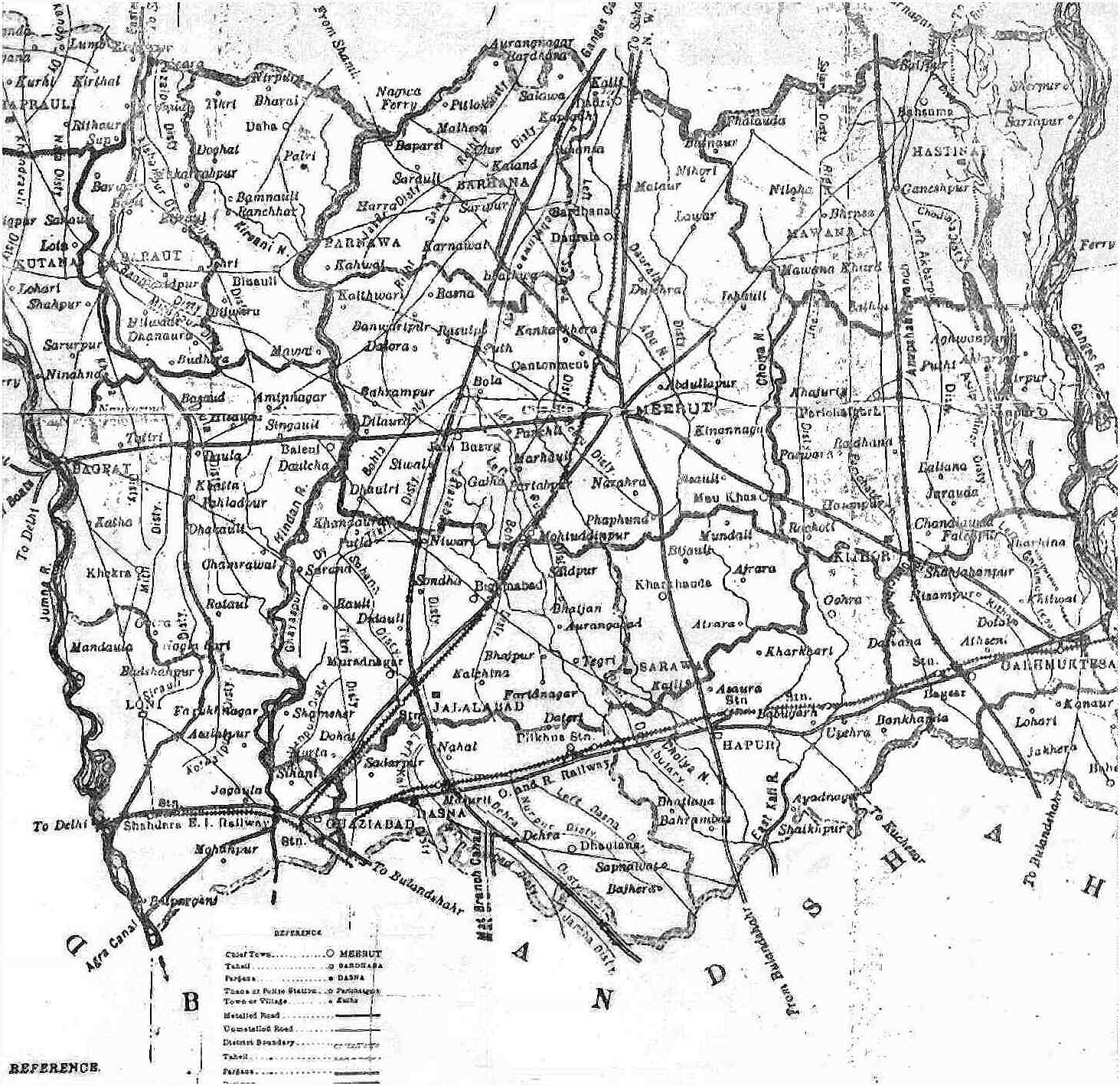
        This set of pages will be expanded considerably soon (hopefully). However presently it is partial to the immediate colonial past.  See a 1904 map of the district ( click here) .And of the town (click here )
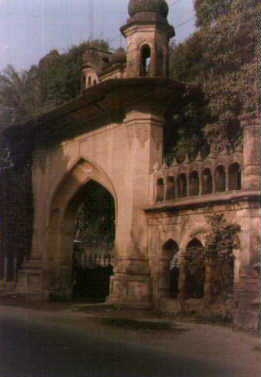
A Grand Gate of perhaps the most impressive building in MeerutPhoto 1
This is the entrance to the Grand building shown below. Belongs to the family of Nawab Ismail. One of the sons was a signatories of the Indian constitution. There is a huge photograph of all the signatories of the constitution in the main room. It is not a public place .
A few figures about Meerut. The latest census puts it in the above 1 million category. It has about the same population as Indore, Faridabad, Thane. It is the 24th largest town in India (populationwise), and the 3rd largest town in UP after Kanpur and Lucknow. Kanpur is larger than Lucknow with a population of 2.5 million.
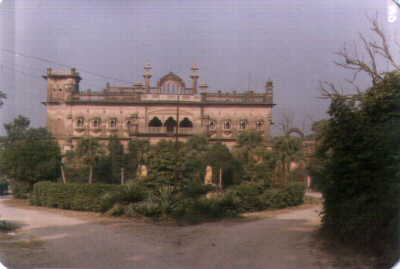


Photo 2
Perhaps the Grandest old building in Meerut. 'Palace' may not be off the mark . Still occupied by the descendants of the original owners. The Drawing room is retained in its original layout as a tradition . Among many antique items is an old floor standing candle stand , which can hold 7-8 candles . It is still used because of a very unreliable electric supply.
West End Road
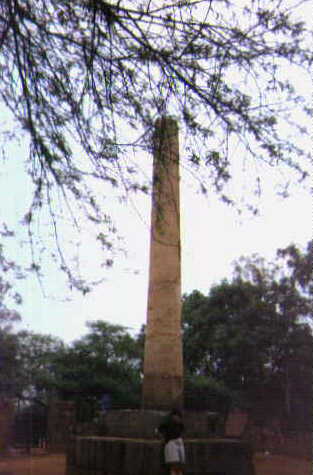
The Pillar removed from Meerut by Firoz Shah Tughlaq in 1306 A.D. Now near Bara Hindu Rao.From the plaque near the Pillar.
ASHOKA'S PILLAR
================
This pillar of Ashoka ( C 263-232 B.C) brought by Firoz Shah Tughluq from the neighborhood of Meerut, was
set up by him in his "Hunting Palace" called Kushak-i-Shikar in AD 1365.
The contemporary historians describe the complicated transport of this pillar from its original site to DELHI by the river. It broke into 5 pieces in an explosion during  Farruk Siyar's reign(A.D.1713-1719 ) . And its inscribed portions were later sawed off and sent to the Asiatic Society of Bengal, Calcutta. In 1866 they were received back and all the broken pieces were joined together and the restored pillar was again put up here in 1867. The Pillar now measures 10M in Height.
 Inscribed in Brahmi Script and written in the Prakrit Language, this inscription of Ashoka contains his messages and instructions for promoting the Dharma and the welfare and happiness of the people.

Did you know that there is a discussion on about whether Asoka actually built the pillars . Here is someone who says that Ashoka made his inscriptions on already existing pillars. These pillars he says are the long lost altars of Alexander the great. That seems unlikely as Alexander is known to have stayed on this side of the Indus for only a few months. The pillars are made of stone from Chunar and are found at great distances from the Indus. Click here to read the page.
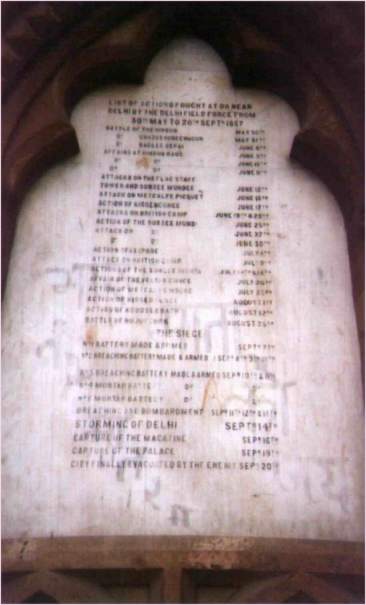


No text about Meerut can be complete without some mention of the Mutiny in 1857
War of Independence if you will. I would call it that if it had been successful. There was no chance of that, we are by nature not really a warlike people. Meerut had a full fledged British Indian Army Garrison while Delhi only had a Field Force at that time.
Meerut is often associated with the start of the 1857 Mutiny - here are some details. Actually an incident in Barrackpore is supposed to be the real beginning. That seems more likely since Calcutta had been longer under British control.

The Following is the text of inscriptions on some
of the marble slabs on the Mutiny Memorial on Delhi Ridge
LIST OF ACTIONS FOUGHT AT OR NEAR DELHI BY THE DELHI
FIELD FORCE FROM 30TH MAY TO 20TH SEPT 1857
Battle of the Hindun
- MAY 30th
" Ghazee Bodee Nucur
- MAY 31st
" Badlee Sepai
- JUNE 8th
Affairs at Hindu Rao's
- JUNE 9th
" "
- JUNE 10th
" "
- JUNE 11th
Attacks on the Flag staff Tower
and Subzee Mundee
- JUNE 12th
Attack on Metcalf Piquet
- JUNE 13th
Action of KissenGunge
- JUNE 17th
Attacks on British Camps
- JUNE 19th & 20th
Action of the Subzee Mundee
- JUNE 23rd
Attack on "
- JUNE 27th
Attack on "
- JUNE 30th
Action of Alipore
- JULY 4th
Attack on British Camp
- JULY 9th
Actions of the Subzee Mundi
- JULY 14th & 18th
Affair of the Trevelyn Gunge
- JULY 20th
Action of Metcalfe House
- JULY 23rd
Action of Kissengunge
- AUGUST 1st
Action of Koodsea Bagh
- AUGUST 12th
Battle of Nujufgurh
- AUGUST 25th

THE SIEGE
No. 1 Battery Made & Armed
SEPT 7th
No. 2 Breaching Battery Made & Armed
SEPT 8th, 9th&10th
No. 3 Breaching Battery Made & Armed
SEPT 10th & 11th
No. 4 Mortar Battery Made & Armed
"
No. 5 Mortar Battery Made & Armed
"
Breaching and Bombardment
SEPT 11th, 12th&13th
STORMING OF DELHI
SEPT 14th
Capture of the Magazine
SEPT 16th
Capture of the Palace
SEPT 19th
City finally evacuated by the Enemy
SEPT 20th

Last year after the militant attack in RedFort, some journalists were wondering why there were military Barracks in Red Fort . Here is the answer . They plundered and demolished the Mahal of the Women and children of Bahadur Shah Zafar. And as further humiliation made them into barracks 'for the troops' . Our Indian Bureaucrats and Military officers have always been partial to British sentiment long after their Departure. No one can really blame them over a hundred years after the incident. As far as the Bureaucrats and Military officers are concerned Independence did not happen. They still celebrate victories over Indian forts and principalities at regimental dinners in the armed forces.
Do read the casualty list on the right. Less than 5000. Now sit and spare a moment for this figure . By the second world war the West had become so 'advanced' that they almost decimated their entire male population below 40. Reliable figures excluding the 2 or 3 million Jews gassed alive during the holocaust is around 20 million. It was such fun killing people that the clowns threw the atomic bomb twice. War was great fun if someone else died, the far eastern powers were not to be left behind . There was a war going on between China and Japan from 1937 onwards . They were also quite industrially 'advanced' and made such beautiful weapons that it would be a shame to leave them on the shelves to rust. They killed an equal number of the population. Yes about 20 million. By the way the AK-47 is very often of Chinese manufacture , though of Russian Design.

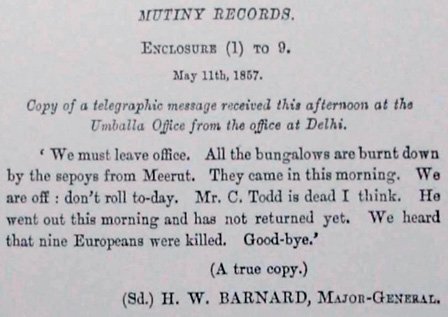
Can you feel the battles in your bones ? In the 20th century war had become too mechanized and impersonal . There were no machine guns at this time. They used muzzle loaders* (also) where each shot needed quite a bit of time to load.The charge may even explode if you were not careful. Swords and daggers were still used. You would kill only if you had to. Do note the dates these are the worst months, in northern India. (Alexander did not feel so great after he crossed the Indus around this time . It wasn't warriors who chased him back but the mosquitoes and the heat.) Travel was not mechanized yet. No not even the bicycle.The Railways were making an appearance in Europe. But the telegraph had appeared , and a telegram was sent to Delhi from the Meerut GPO when the mutineers headed that side. And yes you could die with a minor wound. There were no antibiotics no chloroform.

* Meerut perhaps has the largest number of gun shops in India ( P.L. Sharma Road ). Until a few years back you could still purchase gunpowder and gunshot for use in muzzle loaders. Perhaps even now.
ABSTRACT
OFFICERS NC OFFICERS AND SOLDIERS
BRITISH NATIVE BRITISH NATIVE
KILLED 46 14 543 426
WOUNDED 140 49 1426 1180
MISSING 13 17
TOTAL 186 63 1982 1623


Bravenet.com


Other Pages
 Hi ! Do talk back - with suggestions,...
Ashoka pillar, Mutiny monument Alahabad bank Gandhi Bagh House near Sadar Thana Sophia Jama Masjid Cantt. Railway Station The Mall Jump to other pages here