Meerut : Pictures and Text about a town in North India

The Meerut Scrapbook

Mustafa Castle, Ashoka Pillar


Press F11 for a better view.


Last updated - Tuesday, 15-Jan-2008 21:55:22 EST

The URL here is http://meerutup.tripod.com. Another URL is http://anilbh.tripod.com/meerut in case of inaccessibility. If you decide to revisit the best is to search in YAHOO! with 'meerut' or 'Coronation durbar'. Or go through YAHOO! India/regions. Google is completely unreliable. This site dropped out entirely for no reason after being on the first page for years. Checkout the enormous dfference betweeen the search engines. Try "meerut" as well as "Coronation Durbar" in both and see the difference in placement. Yahoo places both on the 1st page, perhaps within the 1st 5.


Some recent local news

Plus other things


Sunrise/Sunset for 5th May: Specifically for Meerut . Twilight start - 5:11am Sunrise - 5:36am Sunset - 7:00pm Twilight end - :7:25pm. Meerut Latitude : 29.5 deg N, Longitude : 77.05 deg E.

Read previous ones:
April - October 2007,Jan to Apr 07,Oct06 to Jan 07, may06 to sep06,Mar to May 06,Nov to Mar 06,Sep to Nov 05,May to Sep 05,Feb to May05,November to Feb05,Aug-Nov04,May,Jun,Jul,Aug,Feb-May04,Nov-Jan04,Oct03,Sep03,Aug03,Jul03,Jun03, May03,April03,Feb03,January03

Just another day in Paradise

There are problems in paradise too. You may be aware that the moment you even whisper a number, Paradise vanishes. Recent local papers mentioned that there is a glut of potatoes in all the areas nearby. All cold storages are refusing space. Potatoes were selling at a little over Rs. 5.00 per Kg in the market. The farmer was not getting more than Rs.2.60 for his efforts. This at a time when there is a shortage of wheat and rice. Even so I would rather take pictures of fields and trees rather than multi-storied buildings, flyovers and traffic jams.

To each his own. Most people's heroes are those with an unlimited bank balance, sitting in air-conditioned comfort, flicking specks of dust from their ironed suits. Mine are these people who are in the fields when the temperatures reach 45 deg C ( like now mid-May).


Barring the tractor, this could be a scene painted 300 years earlier ( Potatoes and chillies were brought to India by the Portugese in the 17th century ). More about the low value of agricultural products. Not far from here in many village shops you can pick up a packet of potato chips at Rs.20/- for 100 gms. or about Rs. 200 per kg. Which is about 40 times the value the farmer gets. Maybe an MBA graduate understands this.. One thing is certain there are major aberrations in the Indian Economic scene.

An electricity pole is also visible in one of the pictures. It is for a tubewell nearby. Our villages are far from electrified. With barely 4 hours of electricty. So even those who first got connections have got them disconnected due to enforced minimum charges.

Agriculture throws up a lot of combustible material. This could be use to generaate a lot of electricity with mini-turbine generators the same way as Sugar mills do. And proper electrification could make Industry zoom due to a surge in demand from electrical products.


The Wells of Western UP

Sad. This is one book you will never see in bookshops or railway station magazine stands. It is very regional in outlook, and it is also the best book I have ever read. ( For some reason regional is a bad word, among those who have read so many books, that nothing is visible any longer ). "Wells" mean nothing to most of the urban population today. Less than half a century ago they were important everywhere, even in the ghastly places they now call Metros. The book has traced the history of an amazing number of wells of West UP. Be warned only the address of the publishing organisation and the website is in English. The funds for publishing came from the Cultural department of the Royal Netherlands Embassy. Where do the hundreds of thousands of crores the Indian Government collects, go to?
Want to read this then contact Janhit foundation, D-80 Shastri Nagar , Meerut.. Email: janhitfoundation@gmail.com , website: www.janhitfoundation.in Phone : 0121-2763418, 40044123. . Price ? Priceless. This book is really meant only for those who believe fact is more interesting than fiction. Read both the Introduction by Anil Rana and the preface by Harishanker Sharma. The book is not a hackneyed lament about the passage of time or the disruption due to advancing technology, it is a very valid prayer for the preservation or restoration of items which were once the hub of life in this area.


Before the Sun God fries us..

Mornings are still chilly, but one can certainly do without warm clothes durng the day. These flowers speak for themselves and say something different to each admirer. Interested ? There is a flower show on the 9th of March in the Company Garden. Must be at least a hundred year old tradition. If you have not been here for sometime, come and see how, slowly but surely the garden is steadily improving. If the gaps in the hedges are taken care of it will make a major improvement to the overall appearance. A resident horticulturist could do wonders here.


The Last days of real winter

It is still wintery now ( February 8th) but things could change overnight. Of course winter does not bring joy to everyone. Especially those who have an all night vigil to keep. Near zero temperatures can be deadly for those out in the cold, in the middle of the night. Sure many have electric heaters, they are so much junk without electricity. And that is off for at least 8 hours or more every day, in a town of over a million (!!) people. There is a bright side to that too. Business in Inverters and Generators is doing OK.

February 10th: Basant Panchmi - there was a time maybe even just a decade back that one could see groups of people in yellow. Not many now ... But kite flying has not subsided. I saw a girl with a kite and hutchka in hand walking to an open area. The times are certainly changing.

And then one cannot ignore the BUDGET in February. The time when the Sarkari Bunch gets together, yet again, and decides unilaterally how much of your money is theirs. Of course income tax affects only a very small percentage of people. Excise just goes right across the board. Did you know that the excise in the US is close to non-existent? Now we have another flavour called VAT. Sure we get a lot in return . It is just not visible in Meerut. What with 8 hour power cuts, choked drainage, no dustbins, unswept streets .... !

There are so many paradoxical viewpoints about Taxes. Over the last century or so many icons have bitten the dust. Love, Marriage, Family, Community, GOD - nothing is sacred anymore except of course - Taxes. "Death and Taxes are inevitable". This is repeated even in the country which reached the moon.

What is even more wonderful is that 'superior' people are proud of professing their ignorance and disinterest in taxes. Very strange considering an enormous amount is utilised to make VIPs and VVIPs of clowns and criminals.

The word fiscal refers to collected money, and is derived from the Latin word fiscus for money basket. However just hear the budget speeches and you will get the impression that it belongs to the Gods who announce the budget.

When it comes to Common Sense attitudes towards Taxes we are not the only defaulters. The US is supposed to have the most rational administration systems. Since these were installed without the aid of Royalty and Nobility. Yet you will come across a line in material published there which says "those are your tax dollars at work". It is almost like pointing out at a ship just visible over the horizon. Considering the amount which is collected ( in the US ) the benefits could be more obvious.


CNN-IBN Awards

Something is all right with the world... Did you see the awards ceremony of CNN-IBN? I rarely watch TV for more than a few seconds. This I watched spell bound. There is a lot of goodnes in the motherland and this will eventually overcome the evil - I have no doubt about that. Actually there should have been applause for CNN-IBN itself for choosing the people who most of us sincerely respect.


Happy Republic Day

It is all about democracy. An enormous lot of the definition goes right back to Plato's Republic. In keeping with our uniqueness we now have a democracy unlike that in any other country of the world. It is wide enough in definition to embrace rule by criminals! Sorry there is no ..archy for that in English. Or perhaps we are not so unique. There is a saying which goes right back to Aesop's Fables (much older than Asokan Edicts) , which says "We hang petty criminals, the big ones we elect to high office". So if it was OK for the ancient and revered Greek civilization, it must be OK for us too. However we go to the extent of Criminals outnumbering good men. Click here to see a widely circulated Power point presentation

Of New Years gone with the wind

There is something about January in this part of the world. On a windy, sunny, wintry day you could certainly get the feeling that the entire planet was created this month, and all is right with the entire earth. There was however a new Year in the recent past which was extra special. The New Year of 2000. I remembered it on seeing a list in the World Almanac of 1999. The list was called the The 10 most influential people of the millenium. Here is the list.

The 10 Most Influential People of the Second Millenium

By Arthur M. Schesinger Jr.
Arthur M. Schesinger Jr. the Pulitzer Prize-winning historian and writer, is the Albert Schwitzer Proffessor in the Humanities at the City of New York. He served as special assistant to the president in the Kennedy administration.
As we anticipate the advent of the third millenium, The World Almanac asked Professor Schlesinger whom he considered to be the 10 most influential people of the second millenium. Here are the names he listed, in order of importance.
Name Born Died
1. William Shakespeare 1564 1618
2. Isaac Newton 1642 1727
3. Charles Darwin 1809 1882
4. Nicolaus Copernicus 1473 1543
5. Galileo Galilei 1564 1642
6. Albert Einstein 1879 1955
7. Christopher Columbus 1451 1506
8. Abraham Lincoln 1809 1865
9. Johann Gutenberg c.1397 1468
10. William Harvey 1578 1657

Don't know what your reactions are about the list. They are bound to be different from the year 2000, if you saw this list in the newspapers. Mine are these. I was amazed that Shakespeare is put at the head. No one born in the most turbulent century 1900 - 2000, makes it !! A mind boggling number of silent and unsung people who worked on the Silicon chip, Internet and myriad other modern developments are ignored - would any list be enough ? The Professor is/was(?) from a Humanities background - perhaps that is the explanation :). Where does one fit in the Wright Brothers, Henry Ford, Edison, Bell, Nikolai Tesla ... and other great men who have influenced modern life more than anybody else ? If impact on modern life is the criteria, then in my view Edison would head the list. Did you know that Henry Ford and Tesla both worked for a while at Edison's Labs?

"On a clear day you can see forever"

Surprise . This is how a lot of Western UP looks like. The population density here is more than other parts of UP. So where did all the people go. UP is India's most populous State, no doubt about that. However in our backwardness are we doing something right? The largest city does not exceed a population of 3 million (+/- .5million). There are only 3 or 4 towns/cities more than 1 million.

Such roads lead to our greatest and grandest people. They survive not only against the forces of nature and the planet but artificial, contrived ones - corrupt and unresponsive Government being one. Now they are not so heavily taxed, but The Raj was certainly financed by them. Through the Settlement system.

Back to the events of 1857. Neither "Mutiny" or "War of Independence" is correct. It is called the "Peasant Rebellion" by Eric Stokes in his book of the same name. What is hidden in abstruse tracts about the rebellion is that all Sepoys came from a rural background and knew well the exorbitant levels of taxation borne by the farmers. The Rajas had never been able to collect such huge amounts for the simple reason non-payment of levy did not result in confiscation of the very land which allowed farmers to live, that (confiscation) is what the Honourable gentlemen of the East India Company made into Law. You may want to read a very current and readable book by William Dalrymple - The Last Moghul. Completely anecdotal or maybe I missed something.

Here is an interesting episode dating back to the mutiny...
Accordingly a force of 300 Europeans , consisting of 100 men of the artillery and 200 of the 60th Rifles, were dispatched towards Hapur on the morning of the 27th August, the last and greatest day of Muharram. The first halting-place was selected with a view of allowing the troops to remain near enough to Meerut to hear any firing , should any disturbances occur there, and at the same time to frighten Walidad by the advance of our troops. In the spirit of the instructions already issued , the column had orders not to go near Malagarh nor to advance beyond Hapur unless attacked or pursuing . It therefore took up up a position near Hapur, and Mr. Wilson took advantage of the presence of the troops to collect the revenue. The Rajput landowners of Pilkhua sent in to say their revenue was ready and that they were ready to bring it in, but begged that two messengers should be sent to accompany them . Two men were sent , but as soon as they entered the village were murdered by these very people of Pilkhua. A portion of the column visited this village with exemplary punishment. ... page 183 of The Old Gazetteer of Meerut 1903.. Earlier reference to this at this site.

Rural folk were condescendingly called peasants in mediaeval Europe. Due to the phase lag due to percolation such attitudes still exist in India specially among those suffering from westernisation by induction. However the point is such people are not influenced by artificial luminosity and aura. In other words they are more likely to call a spade a spade, or a thief a thief.

The Chakkar of Empire and colonialsim was called The White man's burden , a phrase which has lost its meaning even in the West. Strangely not even the most vehement critic of colonialism ever pointed out that the burden included a pretty heavy treasure chest :) .

1857 minus 43 years

An amazing Battle forgotten

The defense of Kalunga created the Gurkha Legend

It is interesting to examine some major events just prior to the mutiny of 1857. Nepal was attacked in 1814.( Under the treaty of Sigauli they procured Mussoorie, Simla , Nainital. Darjeeling was extracted in 1835 some 21 years later ) . Macaulay's speech ridiculing Indian Knowledge etc. came out somewhere in 1833? And that marks the start of the end of a certain degree of British - Indian social Interaction. Graves prior to 1833 often have a distinct Indian influence to them. After 1857 there were no more annexations / battles internally ( prior to that there may have been one in a month or two* ). They just had to extend their demands and the Rajas Maharajas would just bend over backwards. The Princely States really receded after Independence. However before Independence they had paid huge sums to the British. They finally became paupers after Indira Gandhi withdrew their Privy Purses. The defeat of the Gurkhas really gave a lot of boost to the EIC morale.

*If you stay at Carlton's Hotel in Happy Valley in Mussorie you can see a number of paintings depicting battle scenes in various villages. Some of these villages may now have vanished.

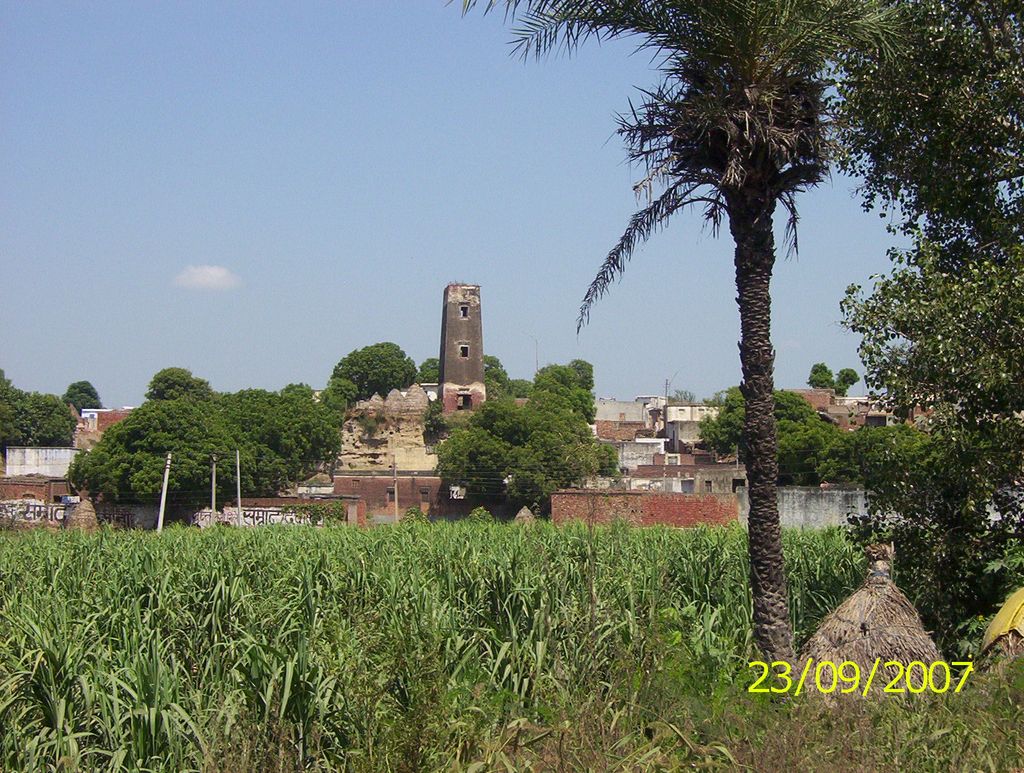
The tower which marks Gillespie's grave in St. John's cemetery, gives 31st October 1814 as the date of his death. And therein lies a tale which seems to have been told only in Nepal. Not of Gillespie and his East India Company 'Army' but of the people he attacked. A settlement at Kalunga near Dehradun of Gurkhas in which almost 30% were Women and Children . Gillespie took about 4000 men from Meerut around 23rd of October ( the official invasion ordered by Hastings was to start on November 1st ). The settlement of Gurkhas numbered only about 700! The encounter lasted almost 5 to 6 weeks. There are detailed letters dating from that time which make the long-drawn battle come alive, after close to 200 years. That settlement contained perhaps 300 to 400 Gurkhas who called themselves "The Malechha - Kalanala Company ". The British were called Malechhas by the Nepalis and Malechha - Kalanala roughly translates to "The company which is the fire of death to the British ". Just 43 years later the Gurkhas with the Sikhs sided with the British and were instrumental in crushing the "Mutiny". Six letters which were written while the battle was on were found by the Regmi Research foundation and are part of a project which lasted 20 years. Read those by clicking here .

This tower is a landmark of sorts in the immediate region. The more knowledgeable know it as Gillespie's grave. What even the most knowledgeable don't know is that it is also a memorial to the battle that created the legend of the Gurkhas. About the confrontation in which he was killed. It is sheer chance and the power of the Internet that one finds enormous amount of detail for this one battle ( very prolonged ) - thanks mainly to the Regmi Research Foundation which took 20 years to translate material into English with support from an US University. The reasons why this ( details of the battle ) was kept undercover need not be explained. Type Gillespie in the Google Books box below to get an account of the Vellore battle in Gillespie's own words.

Thinking of visiting India for mutiny related sites or general site-seeing then you could do worse than click here

Google Book Search

Here is the excerpt Pages 559 - 561 of the UNITED SERVICES MAGAZINE of 1840 . If you can get your hands on this particular issue (it can be downloaded from Google books (40 MB!)), you will get a good idea of the 'high' that pervaded the British psyché at that time. The account relates to 1806. Still a few years before 1812, which, with the defeat of Napolean was a major landmark in the ascendancy of the British. Click here to read.

Also from the same magazine (1840) is a discussion about muskets / rifles . I am not sure of what distinguished one from the other. Or maybe they meant the same thing. My impression is that rifles used cartridges and muskets the the shot and powder had to be filled in manually. Very interesting all the same since these were the kind of weapons that were used during the 'mutiny'.

1840.]       CORRESPONDENCE.       547

Calibre of the Infantry-Musket

MR. EDITOR. ---- I cannot but think our authorities, in continuing the use of muskets so wide  in their calibre as those of the present regulation have overlooked the obvious fact, that heavy as are those muskets, they will not, without as intolerable recoil, beat the charge of powder requisite to give highest velocity and greatest range to the bullet. The point-blank range of the infantry musket 3 feet 6 inches in the barrel, weighing with sling , 13 lbs., carrying a ball of 1 to the pound , and loaded with 6 drachms of powder, is but 140 yards; that of a 30-inch rifle , weighing 10 lbs. 8 oz., loaded with drachms, and carrying a ball of 20 , is 250 yards at least . Now , we all know that a smooth bore caeteris paribus, according to Robins --- gives greater range than a rifled barrel, because the rifling retards the motion of the lead; and from my own experience I should say, that a piece 25 to the lb., having its cartridge made nearly to fit, would do execution at a far greater distance than the present unwieldly weapon, with its loose charge.

2 N 2

548      CORRESPONDENCE.         [AUG

Much of the inaccuracy complained of in musket-fire arises from the execessive recoil. Now we know that the recoil depends on the relation between the weight of the weapon , the powder, lead. Whatever increases the first, or diminishes either the second or third , is therefore , desirable. So well are the Americans aware of this , that their smooth bores, -- perhaps the most deadly of fire-arms, --- although constructed but to receive a bullet of 30, weigh nearly as much as our muskets taking a ball of 14; yet at 100 yards, the American smooth bore would lodge 3 shots for 1 from the English line-musket.

The sole objection to reducing the calibre is the apprehension of thereby decreasing the range ; but if the same weight of fusil and of powder be retained, the reverse ensues. No one can dispute that a 12-lb. smooth bore, of 20 or 25 , will, with 6 drachms, throw its lead farther and truer, because with less recoil than an ordinary musket of the same weight. Now, I believe the experience of the Peninsular War pretty well showed that balls of 20 to the lb., fired by the Rifles, gave death as often as those of 14, sent by ordinary Foot. Nay, the rifle-carbines served out to the Hussar skirmishers proved little, if at all, inferior to the long, heavy infantry-fusil.

What I would propose, then is , that the new-regulation musket should differ from the present rifle* only in its percussion-lock and the smoothness of its bore, which should be polished perpendicularly instead of horizontally, and the the sword-bayonet 2 feet in the blade, to fix underneath like that of the Cape Corps. The light company might have their pieces scratch-rifled, for greater accuracy, but the trap in both stock and sword-hilt to be browned. One-fourth the total weight of ammunition might thus be saved and consequently the number of carts and horses required to convey it on a campaign by so much decreased, as also the weight which on a march presses so grievously on the soldiers' loins. Abolish also the chaco , stiff stocks, and pipe-clay, substituting a crimson or white varnished-leather girdle for th eaccursed cross-belts, and you will find the men fresher after thirthy miles' march than after five-and twenty now.

FLUELLYN.

*Of course, I do not allude to the new two-grooved rifle, which, I must confess, for its peculiar service, to be a splendid weapon. Top-heaviness, when the sword is fixed , is its sole fault. This might be avoided by altering the position of the right hand. If this be done by the way of experiment, the piece will at once be felt to poise perfectly , for a weapon hand to hand, especially if a half-a-dozen loose balls be left in the trap. Held , however in the present way , no man could feel any confidence in it against a musket and bayonet; but grasped as I propose, the relative power of the two weapons would be exactly reversed. The Rifles at the night attack before New Orleans, were closed with; and they should always be prepared against a recurrence of what can never be entirely guarded against nocturnal affairs. I may also add , that by seizing the weapon in the proposed manner, and raising it perpendicularly, an isolated Rifleman may at once throw off the thrust of an assailing Lancer , and by continuing the semi-circular sweep, discharge a slashing cut on the horse's nose, and pierce either the animal or its rider in the act of turning away.

____________________________
- - -   

MEERUT is an ancient town , but little literature about it is available  . Any information mythical, factual, or hand me down stories preferably specifically related to your ancestors are welcome. Contact address is at the bottom of page. To come back to this site look for Meerut in Yahoo regional directory.
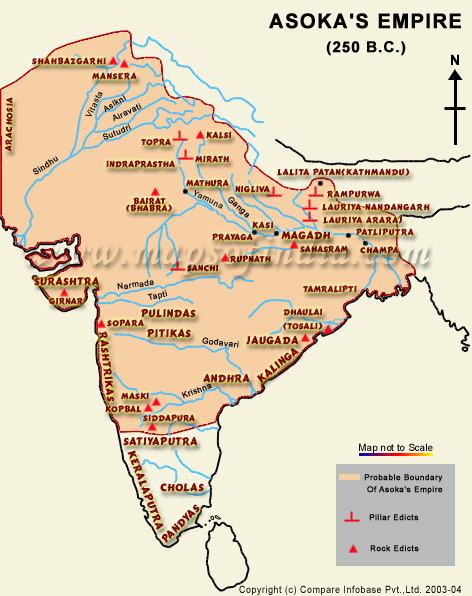
It is not generally known that Meerut was one of the 16 major towns of Ashokan times . An Ashokan pillar was erected here which means that this was a major Buddhist center . This pillar was shifted to Delhi near Bara Hindu Rao Hospital on the ridge around 1300 AD. The one at Firoz Shah Kotla Ground came from Topra. For the uninitiated the Ashokan Period  (a short historical note) dates at around 256 BC. About 75 years after Alexander's ( Sikander in Hindi ) invasion of the Punjab.
Don't know what Ashoka wrote about ? Then checkout the translation of all his Edicts by clicking here .

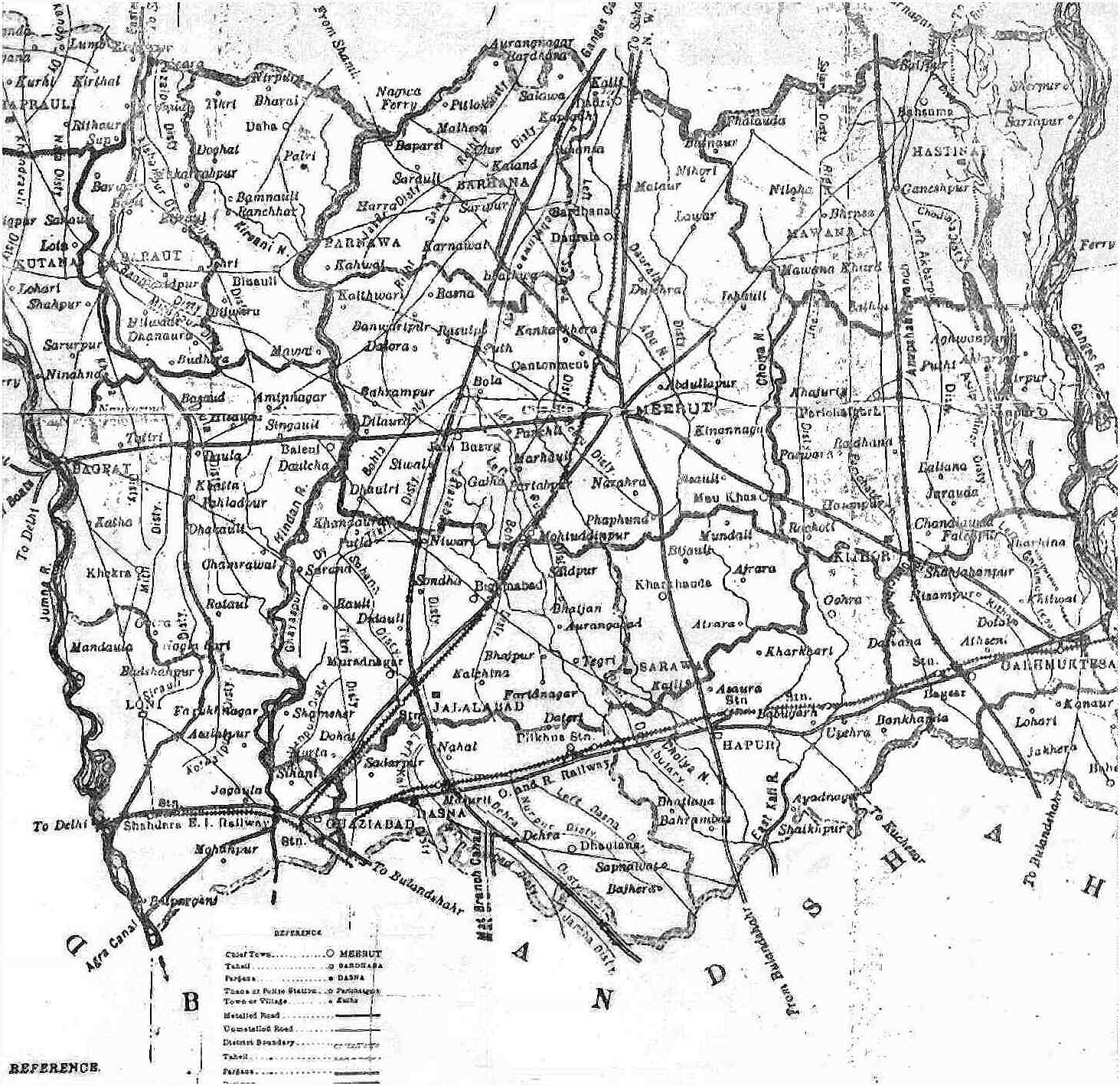
Currently these pages are partial to the immediate colonial past.  See a 1904 map of the district ( click here) .And of the town (click here )
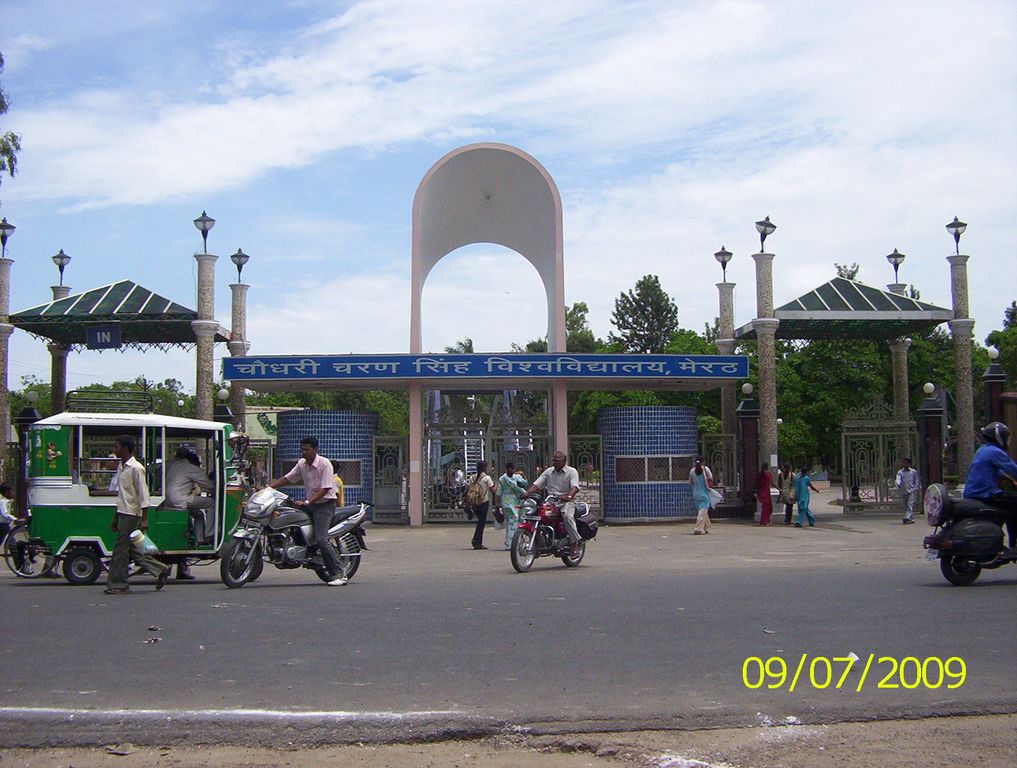
Meerut University Gate

The picture which best represents Meerut is the spectacular Chaudhary Charan Singh University (CCSU) Gate. It is no easy job to label the style . Futuristic ? Modern ? Indian ? Western ? Ancient ? Rural ? Urban ? Take a good look, it is perhaps all of these. The pillars go all the way back to ancient Greece or Rome. And the security cabins? A roof under a roof ? It is perhaps the only one its kind in the world. Help !! Talking about labels.. why should one have a neat label for everything ? And as usual the name of the architect to whom the honours go is not easy to find. Not to a casual observer at least.

Regarding the mindset of people here it would be in order to quote a State Bank of India hoarding which said "Apna Ghar, Anpni Kar, Apna chota Karobar". That came close to defining the axle around which life rotates in many of the prosperous smaller towns in all of Northern India. It seems the coming or going of larger Industries in the vicinity does not have much effect on the economic climate. That is quite obvious in Modinagar where almost all Modi industries have closed down. Here in Meerut there is no let up in new shops opening and flashy Malls coming after Modi Continental closed down. Many visitors note ample evidence that ignorance is bliss. However that does not rankle them as much as the evidence that ignorance is wealth.
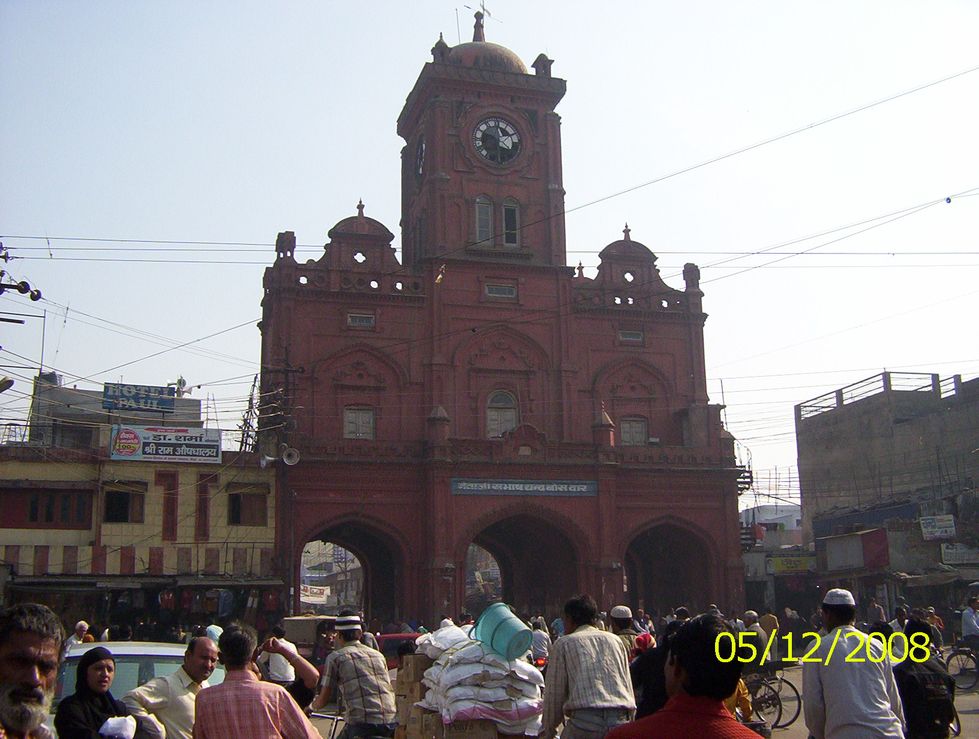
The Clock Tower

That is Ghantaghar in the picture on the left. Easily the most magnificent structure in Meerut. Built by the British in 1914, in place of what used to be Shambu Darwaza(Gate). The window on the left looks out from a little room on the first floor where the old man the keeper of the big clock lived and ran a little shop for clock repair. He died in the early 1990s. Sure enough the big Clock stopped.. short.. when the old man died, nobody rewound it. It is a great change from the open and vacuous Cantonment area. Need a Calculator cheap clock transistor radio or want to get a mechanical/pendulum clock ( yes even Grandfather Clocks) repaired then this is the place. Further down is Lala ka Bazaar - ideal for cheap toys in bulk for Christmas trees, Birthday party favours, all sorts of plastic and glass jars are also available.
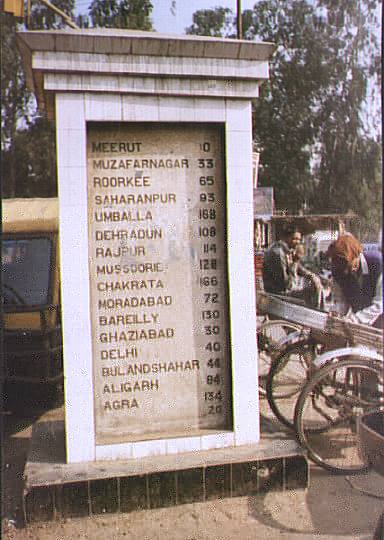
Zeromile point

This milestone is about 400 meters north of Begum Bridge. This area is now known as the Zeromile point after the Meerut Cantonment Board very graciously looked up its records and put back the names which had become invisible on this, well, signpost. The distances are in miles.

Some facts and figures about Meerut. The latest census puts it in the above 1 million category. It has about the same population as Indore, Faridabad, Thane. It is the 24th largest town in India (populationwise), and the 4th largest town in UP after Kanpur and Lucknow, and Agra. Kanpur is larger than Lucknow with a population of 2.5 million. It is about 6 hours drive from the Taj Mahal Agra and Fatehpur Sikri. It is less than 50 Km from Hastinapur the seat of both Hinduism and Jainism. Haridwar - in the region where both Ganga and Jamuna enter the plains - is a little over 100 km.


Click here for the Computer Page. A Computer page to share tips
and local sources for hardware, best prices etc.

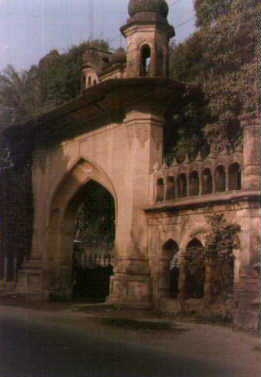
A Grand Gate of perhaps the most impressive old building in Meerut

The entrance to Mustafa Castle is shown below. Belongs to the family of Nawab Ismail. One of the sons was a signatories of the Indian constitution. There is a huge photograph of all the signatories of the constitution in the main room. It is not a public place .
This is what Dr. Tariq Kuraishy ( now in the US for the last 30 years ) has to say about Mustafa Castle....

I am one of Nawab Ismail Khan's grandsons. I've been in the U.S. for almost thirty years, but have been back to Meerut a few times. What you refer to as the Grand Home is actually called Mustafa Castle. Built by Nawab Ismail's father, Nawab Ishaq Khan, and named for his father, Nawab Mustafa Khan Shefta. Shefta was a contemporary of Ghalib's and a prominent poet in his own right. My memories of living there in the 50's and 60's are wonderful ones. Of witnessing the end of a golden and opulent era. When the Nawabs and Rajas lost their estates, titles and lands, the mansions could not be kept up. It is almost sad to visit this once wonderful castle, in it's present state of disrepair. Somebody told me about your site, and it brought back a few memories.

Dr. Kuraishy's e-mail is : kuraishy@sbcglobal.net.
I have included a reply from an uncle of Dr. Kuraishy in Pakistan. You have to click the link in the text adjoining the next picture.
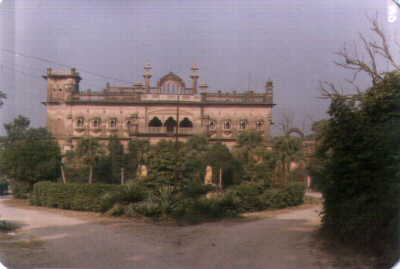


Perhaps the Grandest old building in Meerut. It is called Mustafa Castle. 'Palace' may not be off the mark . Still occupied by the descendants of the original owners. The Drawing room is retained in its original layout as a tradition . Among many antique items is an old floor standing candlestand , which can hold 7-8 candles . Still used because of a very unreliable electric supply. It has been visited by Mahatama Gandhi,Sardar Vallabhai Patel, Nehru, Jinnah.
West End Road
Click here to read further details about Mustafa Castle sent by Mr. Iftikar A Khan in Karachi.If you want to book the area for a wedding , conference , birthday that is possible now click here


The whole place was upgraded in the summer of 2004. It can be hired for Weddings, Birthdays and conferences. It is called Castle View.

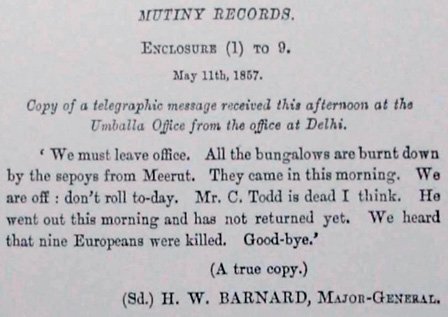
No text about Meerut can be complete without a reference to the Mutiny of 1857. Click here for some notes. Use the Browser back button to come back here.

Move mouse over the descriptive text to change picture.
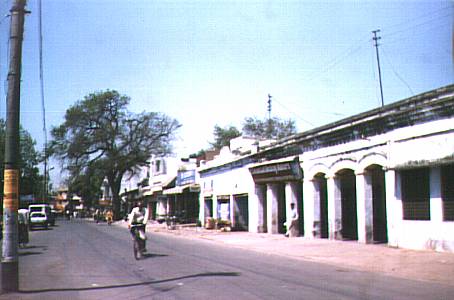

Image changes when you put mouse over the descriptive text.
Just bring the mouse to the side of the list of pictures below for pictures to change ( please wait about 5 secs on a dial up connection).
  1. Bombay Bazar.
  2. Ganga Plaza.
  3. Jolly Stores.
  4. Eastern Kutchery Road.
  5. Defence Colony.
  6. The CDA Building( Belvedere ) used to be a Club around 1880 or so.
  1. Bombay bazaar, old construction it seems . If you look carefully at the top of the row opposite this side you can spot the remains of the Imperialistic crown.
  2. Ganga Plaza . Named after the daughter of Dr. Brijraj Singh son of Dr. Bhopal Singh. The nursing home and huge bungalow was replaced by this complex. You can dabble in shares with Reliable Investment and Demat services. Has an underground air conditioned shopping complex. Dominos opened here with great fanfare but could barely last one year. There is no great rush for westernized stuff. You have to be careful about being too slick here. There are many other shopping complexes here but none with the air of Ganga Plaza.
  3. Jolly Stores - In Sadar Bazaar easily the most well stocked store. You get everything here. No, no, no Aircraft carriers, no Battleships, no 747's - no space you see, but other things , yes.
  4. Some houses A well maintained old design at Eastern Kutchery Road. Some people are doing quite well thank you. The mess is evident only when you direct your attention to areas of Government responsibility - Electricity, Drainage,Roads, Govt. Offices, Courts and Garbage disposal ( the rare garbage bin is seen only near Govt. Employee housing - Civil Lines , Army areas etc. ). You cannot blame the current incumbents for this problem. This (the penchant for directing public money to benefit Government minions is a legacy problem, going back to Shahi and Colonial times) any benefits to taxpayers (the entire population - not just 10%) was always in the form of spillover. However there has been a distinct degradation of municipal services in the last decade or so.
  5. At Defence Colony. Omissions just mean that I dont have pictures of many more beautiful houses all over in Saket, Pallavpuram,Shastri Nagar .. The most impressive new house ? Just go and see the one opposite the Arya Samaj Mandir near Gole Market in Saket. Is it also a home?
Visitors:
Click for New Delhi, India Forecast
Bravenet.com

Search term:
Case-sensitive? yes
exact fuzzy

You can search also this site using Google's search current site. If you have Google toolbar.

Other Pages
  Hi ! Do write back with reactions /suggestions /objections...
Ashoka pillar, Mutiny monument Alahabad bank Gandhi Bagh House near Sadar Thana Sophia Jama Masjid Cantonment Railway Station The Mall Jump to other pages here
Books, articles, documents linked on this site : Macaulay's speech regarding a fund meant for upgrading India. , Macaulay's Complete text on Clive - very readable. You can even download a PDF file and print it. , A letter (2003) from a cantonment official to a resident of the cantonment quoting a 19th century East India Company document - the Old grant , Some idea of the state of Britian in Early 19th and late 18th Centuries , A viewpoint about the Mutiny - Ashok Nath , Extract from the Gazette of Meerut of 1903 , British trade at the peak of colonialism - Jeremy Seabrook , Imperialism begins at home - Jeremy Seabrook , Extracts from Macaulays text on Clive with reference to the Mahrattas , Inscriptions on the Mutiny memorial on the ridge at Delhi , Text of the Old Grant also CGO 179 ( CGO=Council General Order) , Rambles & recollections of an Indian Offical ( 1836 text - W. M. Sleeman) , The fall of the Mughal Empire in India , The Coronation Durbar of 1911- the Last , Site about a feature film by Charles Urban covering the 1911 Durbar , Of lavish Durbars and famines ,
About East India Company and Victoria's Empire , For those curious about Royalty , Delhi Railway museum leaflet , Sir Saiyyad Ahmed Khan's speech at the Nauchandi fair on March 14th, 1888
About the British ( almost all European nations had East India companies) East India Company, About the rule and money collection methods in India, the main reason for their affluence and glory